Carved Ceilings History Book
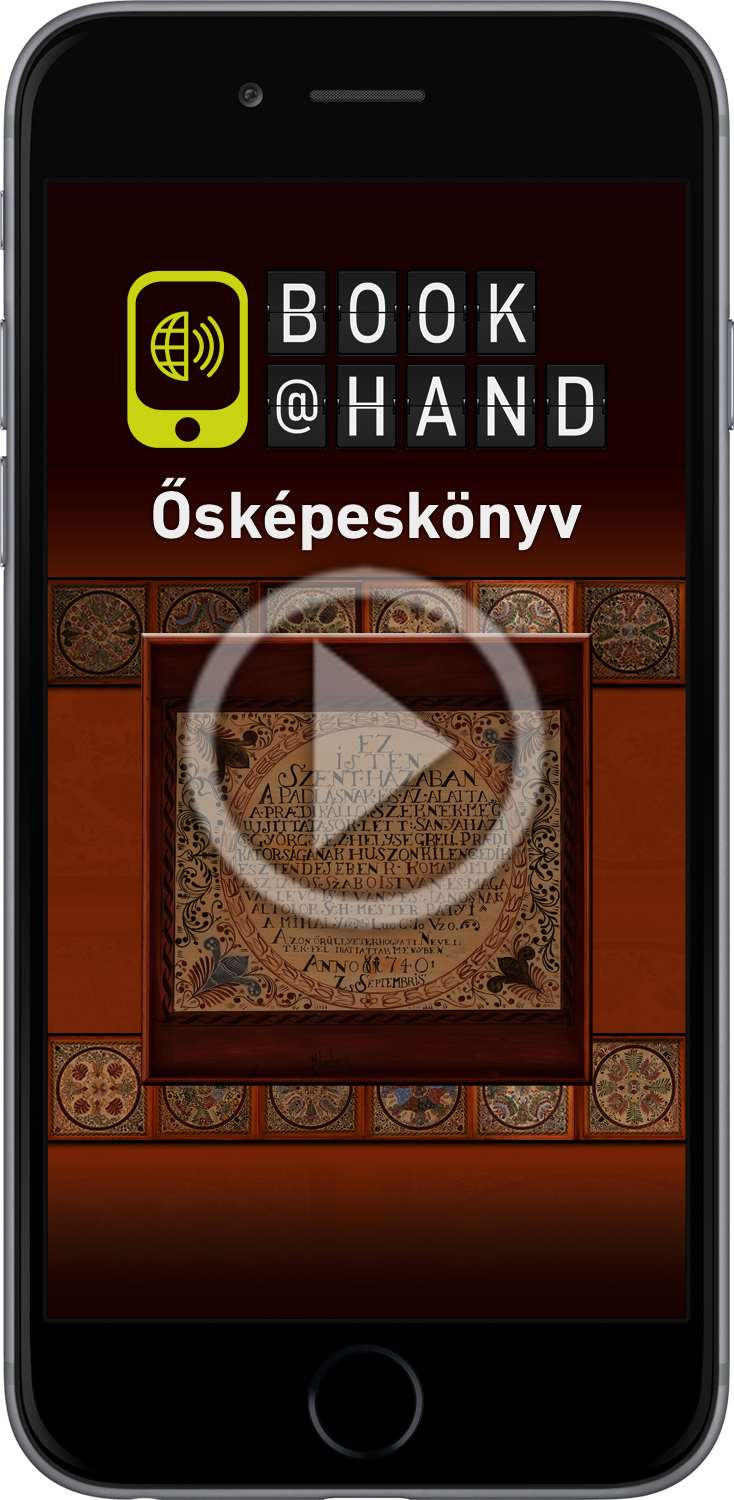
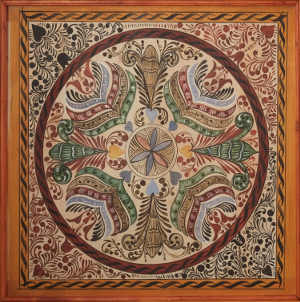 | The BOOK@HAND “Ősképeskönyv” (Carved Ceilings History Book) application brings the images on the ceiling of the Reformed Church in Tök village, Pest county to a close-up view of its users and presents the meaning of each image. |
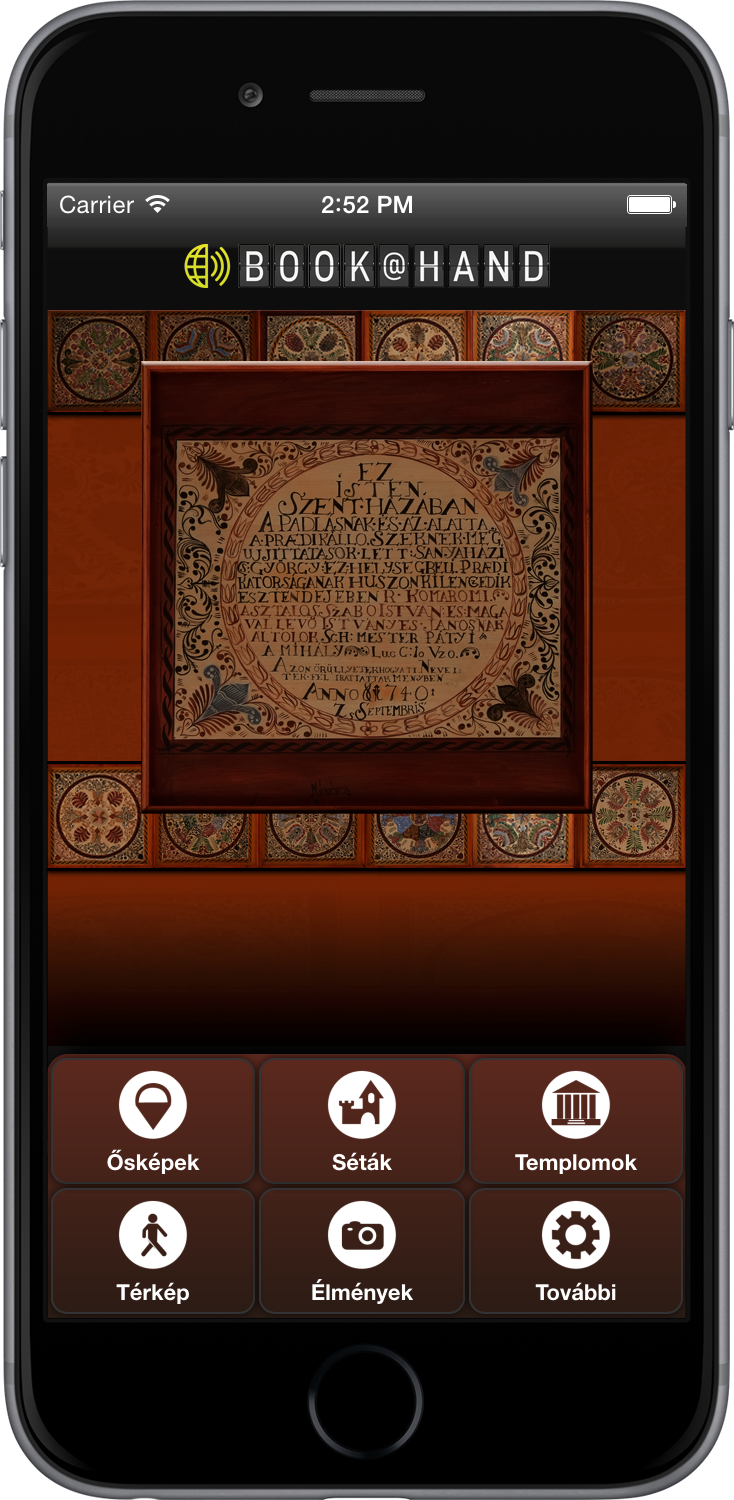
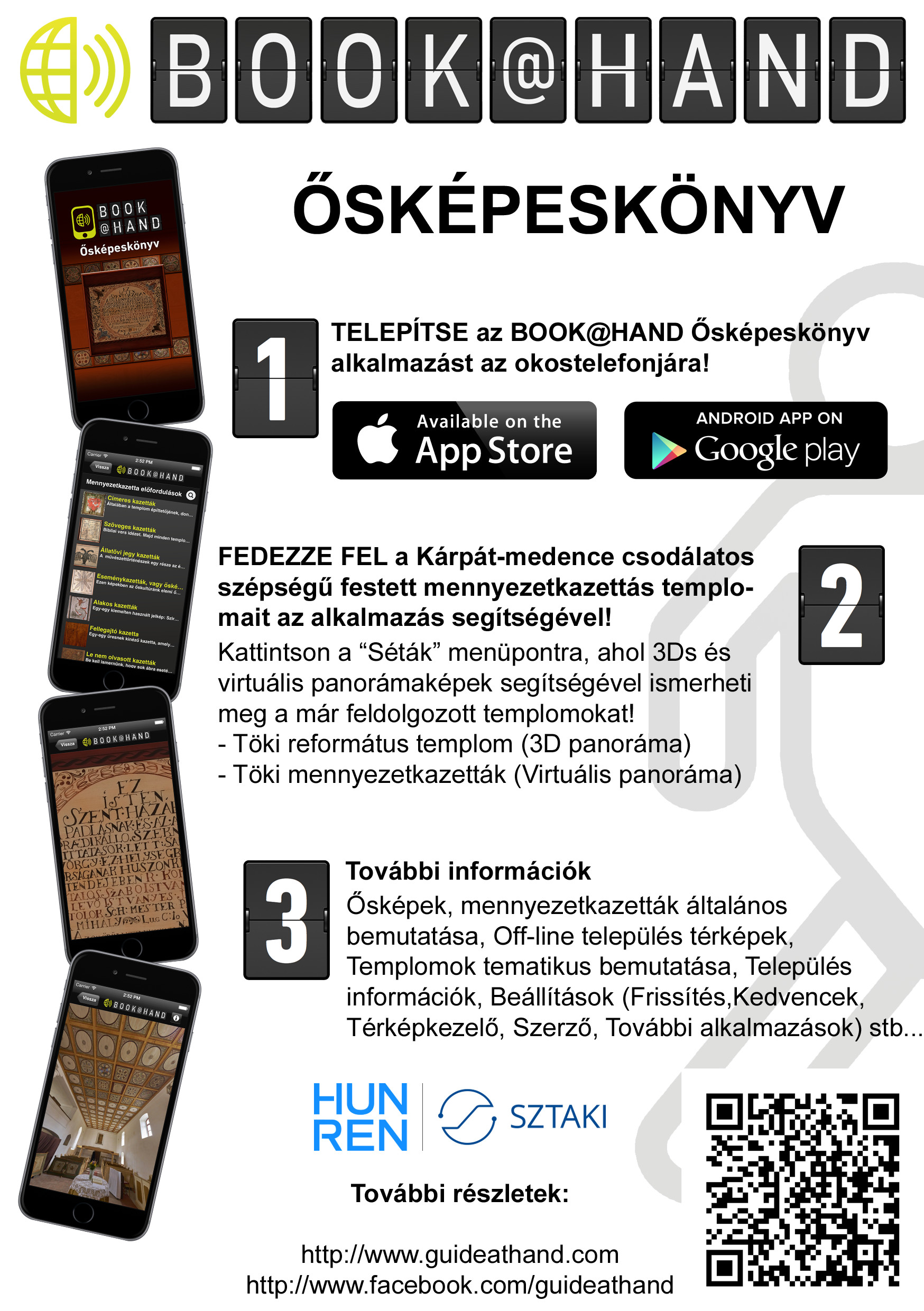
The application contains several new features, such as a high-resolution 3D panoramic walk and the presentation of interactive virtual panoramic images. These services are available in the “Walks” menu of the app. New walks can be downloaded separately, therefore no internet connection is required while using them - for example, to view the panoramic images during onsite visits to the host church.
Featured by the high-resolution 3D panoramic walks, exciting details of the selected images can be viewed without having to make a personal visit to the site concerned. In the case of interactive panoramic images, there are two options for “controlling” the images. By choosing automatic control, you can “look around” the image by rotating your smartphone, while in the case of manual control, the image can be arbitrarily moved and even enlarged. By tapping on a particular part of the interactive panorama picture, additional information about the given detail will be displayed.
According to the latest plans further churches and details of their reliques will be introduced in the application soon.
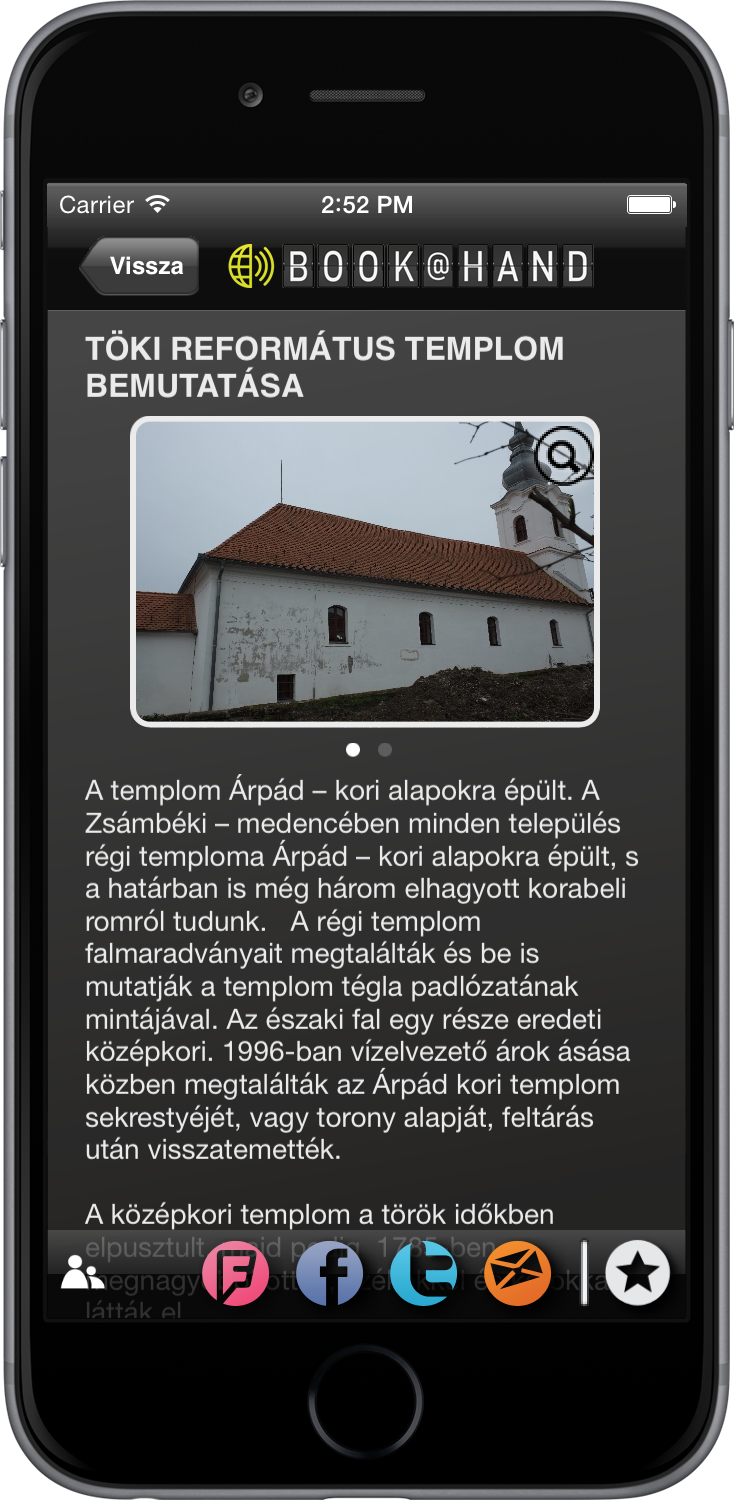
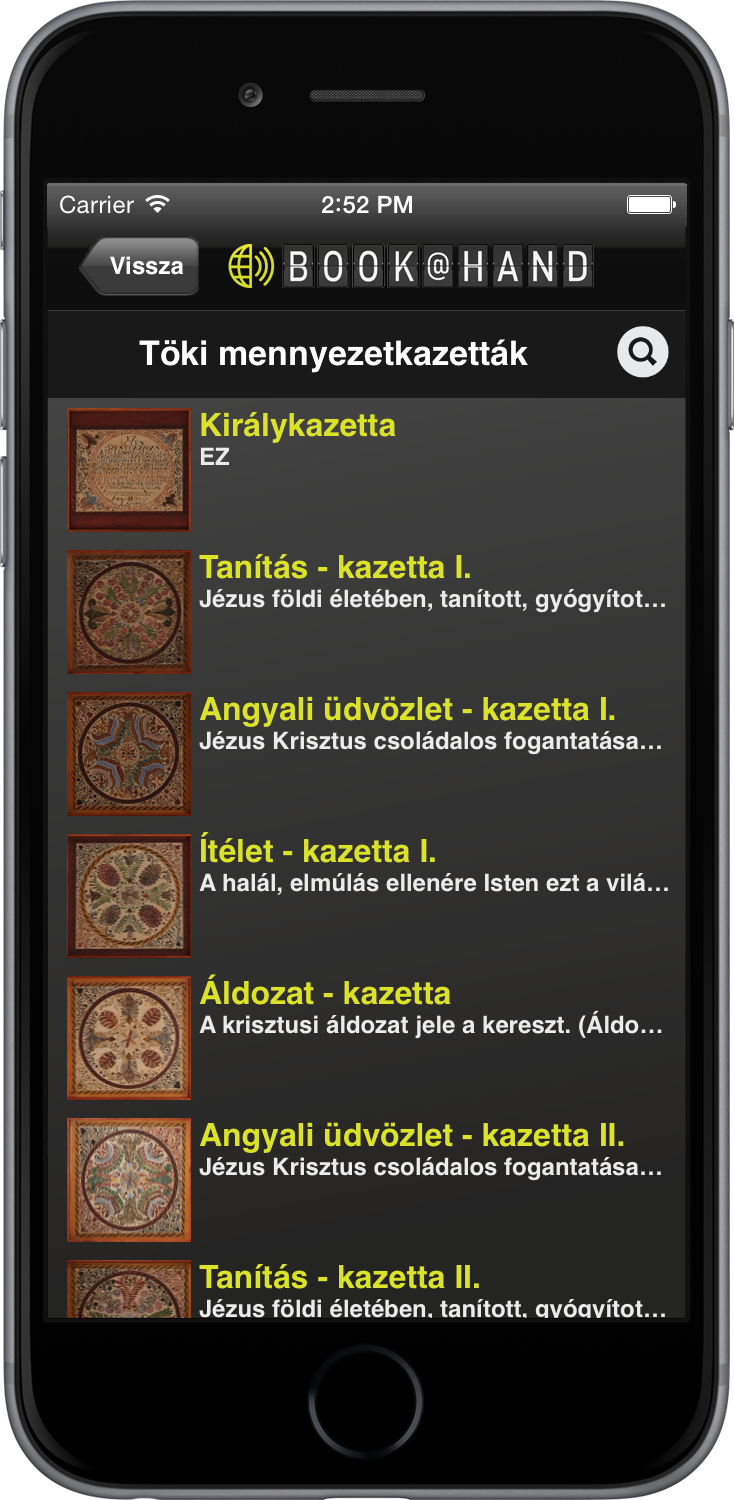
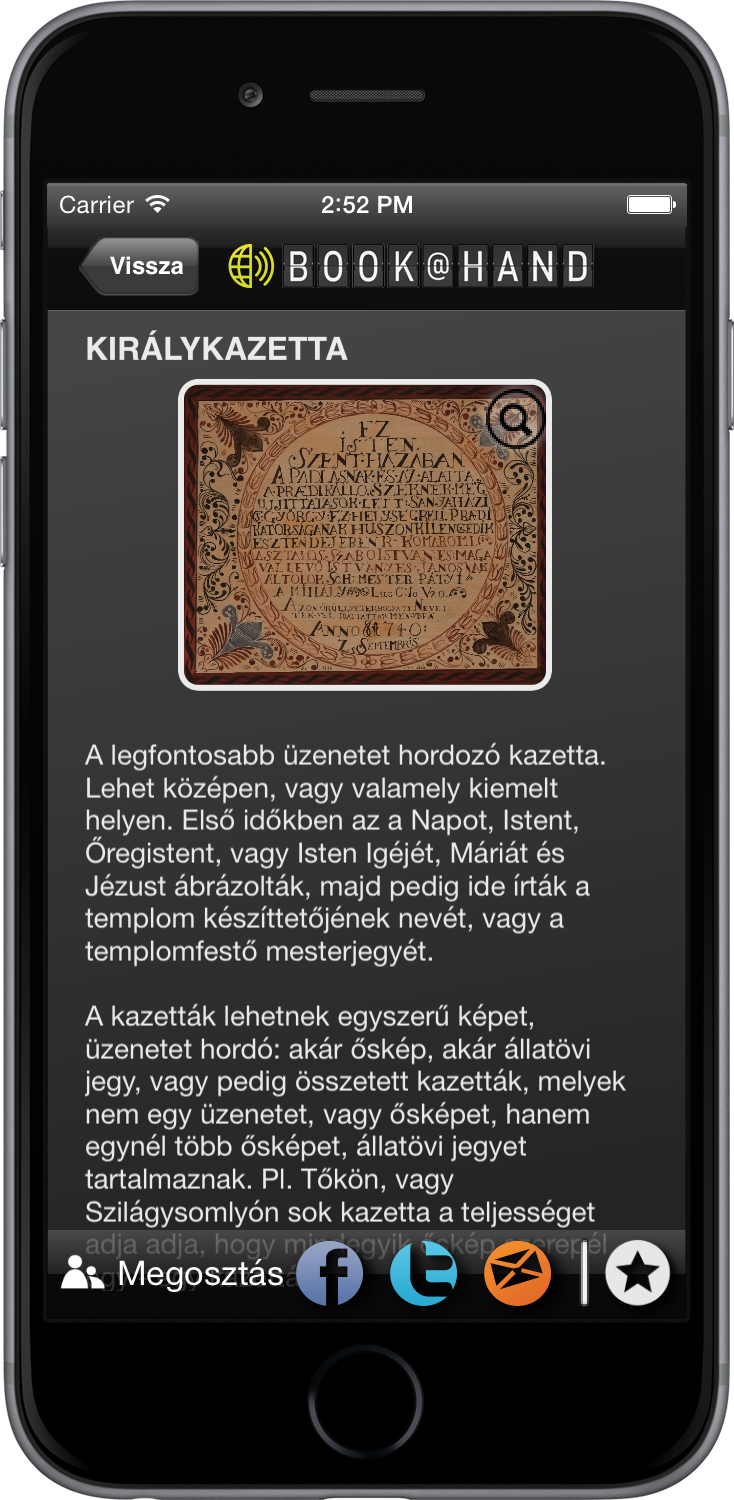
Help to access the app:
Video:
Hydrology Memories
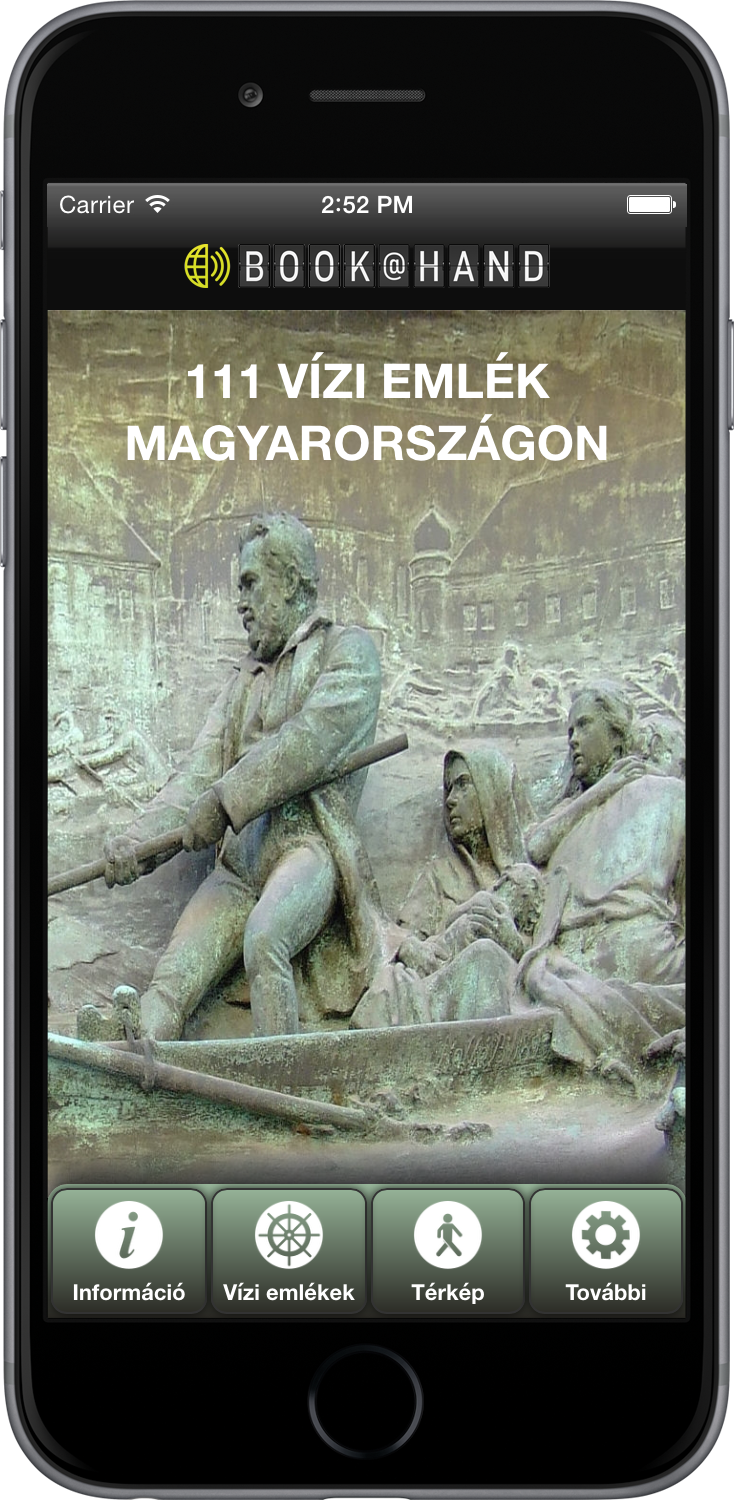
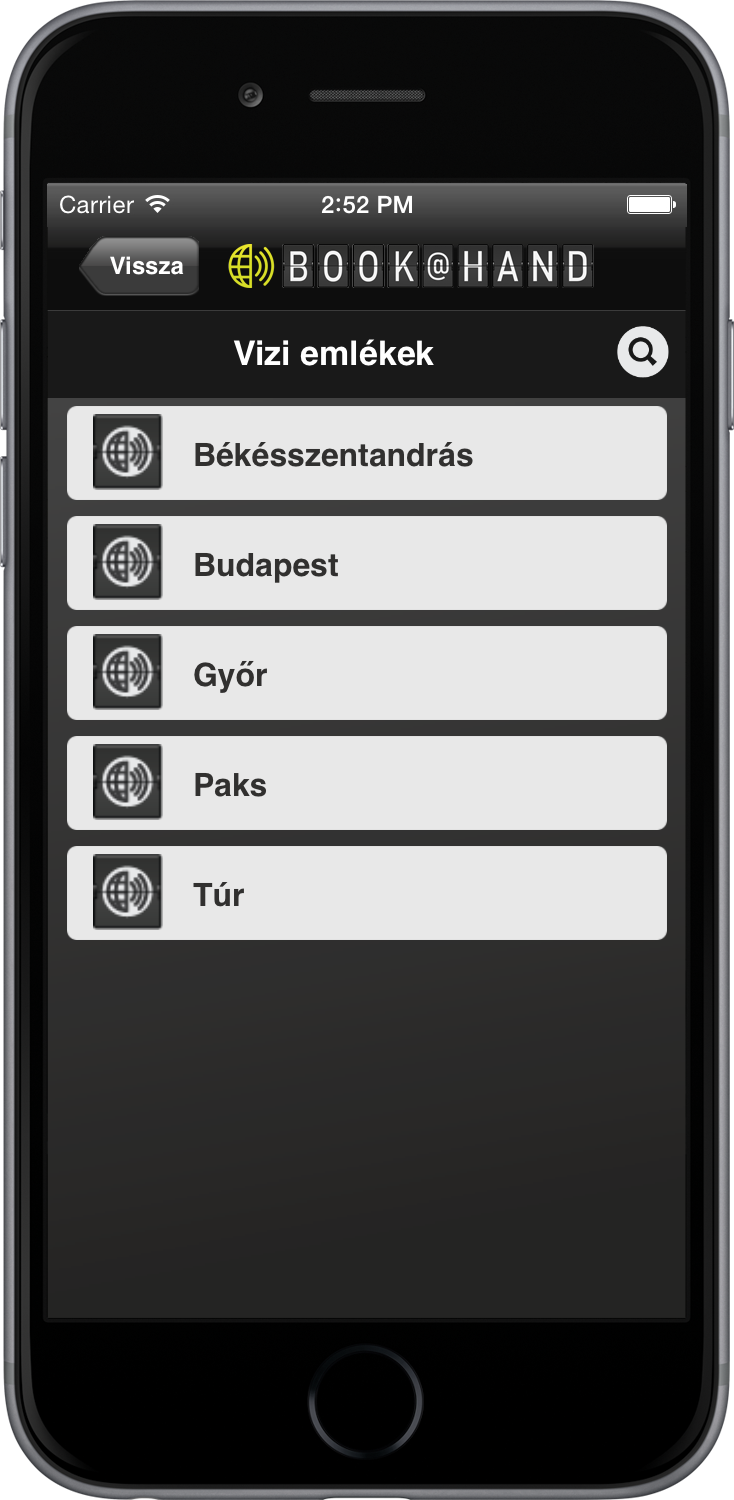
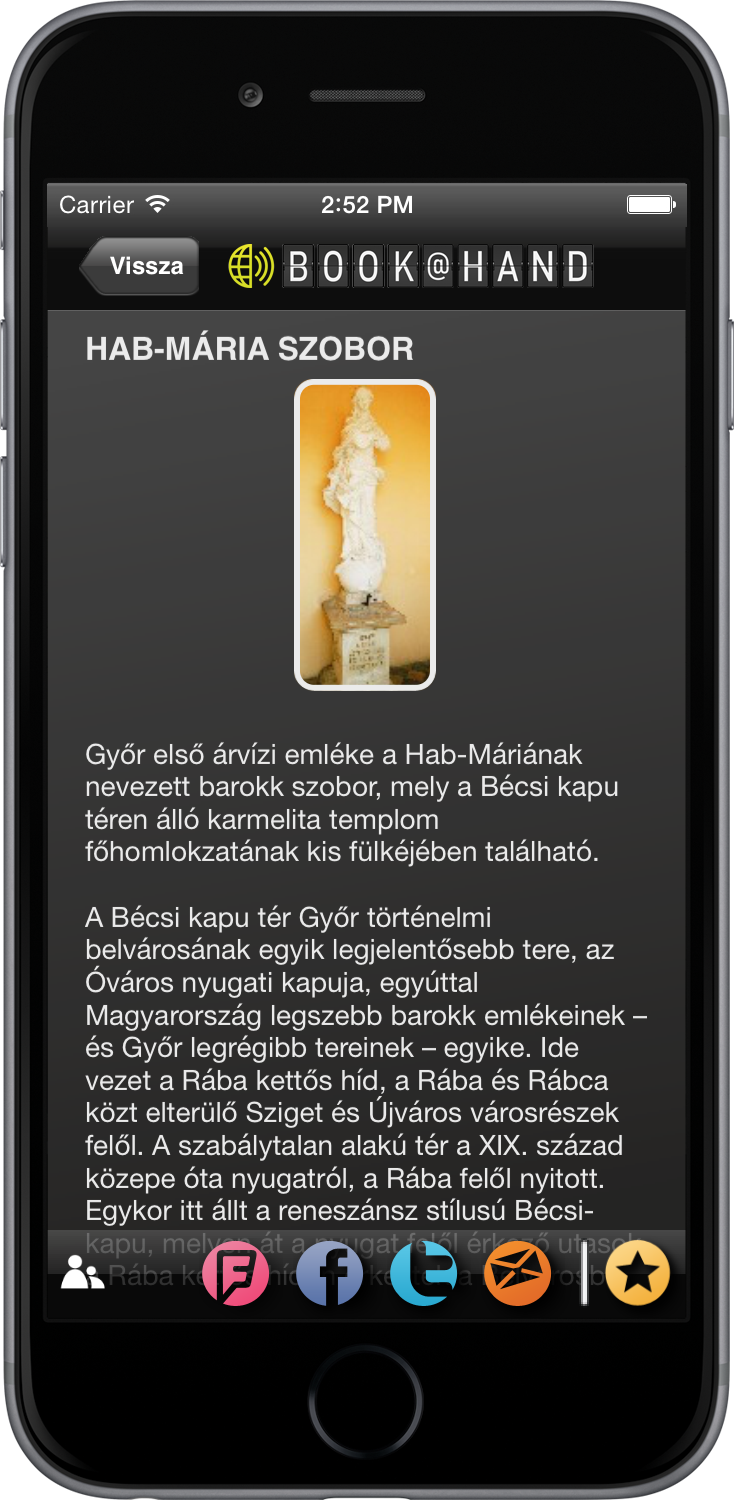
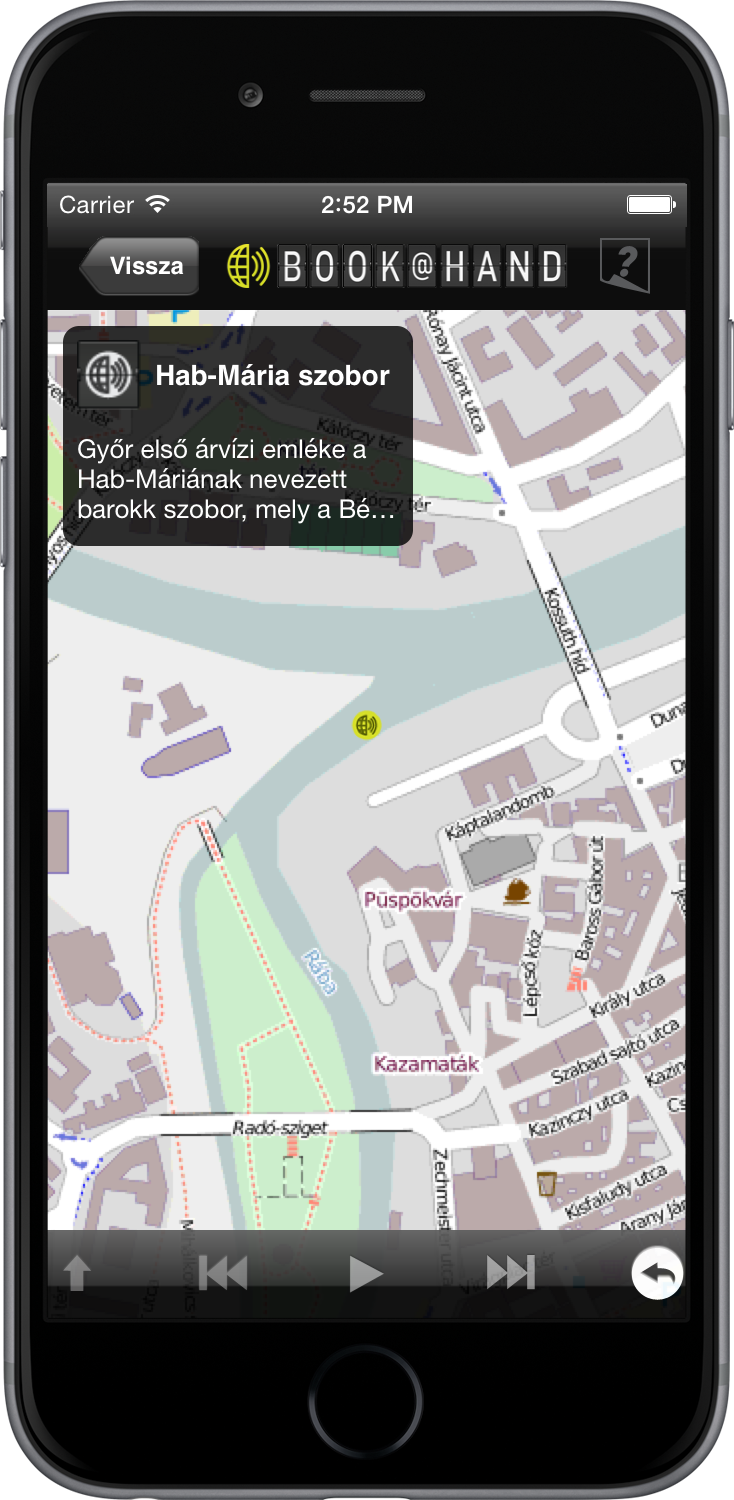
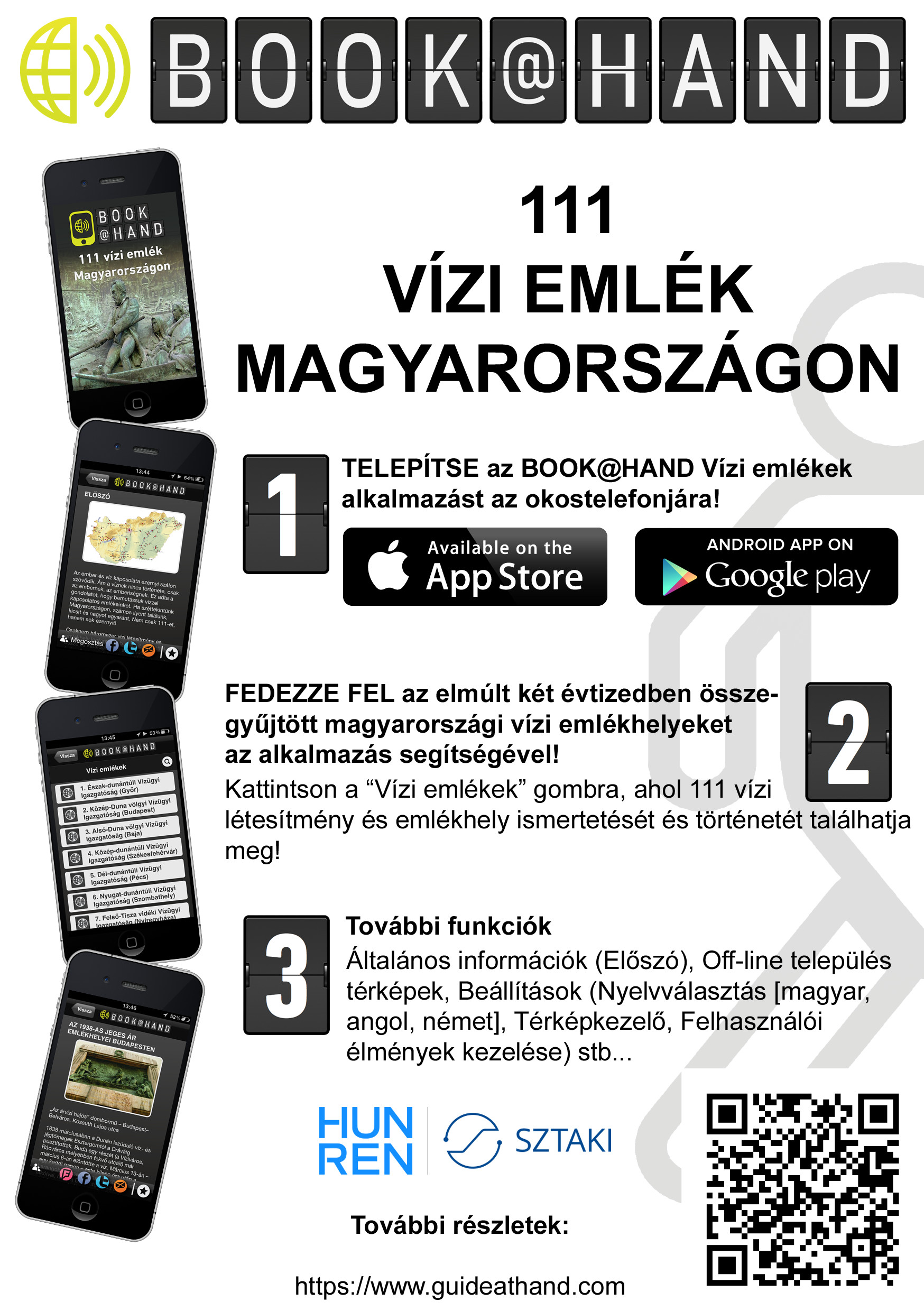
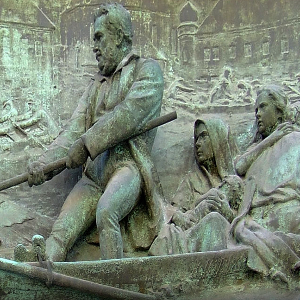 | The BOOK@HAND Hydrology Memories application contains the full content of the book "111 Water Memories in Hungary" by László Fejér and Dr. Lajos Szlávik in three languages (Hungarian, English and German). Information originating from the book is also supplemented with interactive map support. |
The relationship between man and water is represented by thousands of threads. However, water itself has no separate history, only in relation to mankind and humanity, and this basic idea guided us to present our memories related to water. Just look around in Hungary, and you will find many of these objects, both small and large. Not merely 111, but thousands!
The authors have collected and catalogued the most important data on almost three thousand water facilities and memorial sites over the past two decades – with the participation of active and retired employees of water management directorates, water and sewerage companies, water management associations, and with the voluntary help of those interested in water history. We have thus learned about the existence of an incredibly diverse range of water monuments of different ages and fates. Just to mention a few of them: Roman-era structures, historical bridges, watermills, flood memorials, flood boards, dam watchtowers, spring impoundments, wells, ornamental fountains, water towers, dams, pumping stations, sluices, water level plates and many others.
It is due to the nature of water works that the results are most often embodied in a single artifact or building object. It is rather difficult to present them in an exhibition, but they can be displayed very effectively on the pages of a book or on the screen of a mobile device. Our primary aim is to apply these ways to raise the attention of professionals and the wider public to the values and historical memories of Hungarian water management.
Help to access the app:
Video: